
IVF Cost in Mexico: 2026 Price Guide (Save 70%)

Table of Contents
- IVF Cost in Mexico vs. The U.S.: A Clear Price Comparison
- A Detailed Breakdown of IVF Costs in Mexico
- City by City Guide: Comparing IVF Clinic Costs Across Mexico
- Why is IVF Treatment in Mexico So Affordable?
- Planning Your Path to Parenthood: Finding the Right IVF Clinic in Mexico
- Frequently Asked Questions
Facing high infertility treatment costs? This guide reveals how Mexico has become a top destination for affordable, high-quality IVF.
We'll break down the exact IVF cost in Mexico, compare it to the U.S., and explore prices for donor eggs, PGT, and medications. Discover why costs are 70% lower and how to choose the right fertility clinic.
IVF Cost in Mexico vs. The U.S.: A Clear Price Comparison
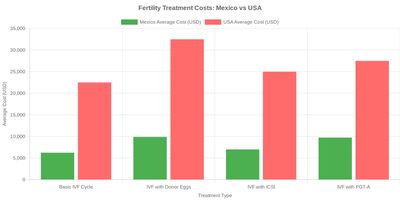
The price difference between fertility treatments in Mexico and the United States is striking. Let's examine the numbers.
When you compare side-by-side costs, the savings become crystal clear. Mexican clinics offer the same advanced procedures at a fraction of U.S. prices.
Here's what you can expect:
Complete IVF Price Comparison
| Fertility Treatment | Average Cost in Mexico (USD) | Average Cost in the U.S. (USD) | Potential Savings |
|---|---|---|---|
| Basic IVF Cycle | $4,500 - $8,000 | $20,000 - $25,000 | 60-70% |
| IVF with Donor Eggs | $7,300 - $12,500 | $30,000 - $35,000+ | 65-71% |
| IVF with ICSI | $5,000 - $9,000 | $22,000 - $28,000+ | 66-72% |
| IVF with PGT-A | $7,500 - $12,000 | $20,000 - $35,000 | 50-65% |
These numbers tell an important story. A standard IVF cycle that costs $22,000 in the U.S. might run just $6,000 in Mexico. That's $16,000 in your pocket.
The Economics of Extensive Fertility Treatment
The more complex your fertility journey becomes, the more you stand to save.
Think about it this way: a basic cycle saves you thousands, but advanced procedures save you tens of thousands. The absolute dollar savings grow substantially with complexity.
Consider double donation cycles. These procedures use both donor eggs and sperm, providing hope for many couples facing severe infertility challenges. In Mexico, you'll pay between $8,000 and $12,500. In North America, the same treatment costs $25,000 to $40,000.

Even after accounting for travel expenses, the math works in your favor. Most patients spend $1,000 to $3,000 on flights and accommodation during their stay in Mexico. Add this to your treatment cost, and you're still saving enormous amounts compared to a single cycle back home.
The cost savings multiply if you need multiple attempts. Many couples require two or three cycles before success. In Mexico, three cycles might cost what one cycle costs in the U.S.
A Detailed Breakdown of IVF Costs in Mexico
Understanding exactly what you'll pay helps you budget effectively and avoid surprises. Mexican fertility centers typically offer transparent pricing.
Let's break down the costs for each component of your fertility treatment.
Standard IVF Cycle Costs
A standard in vitro fertilization cycle uses your own eggs and your partner's sperm. This represents the baseline price for most patients.
The base price ranges from $4,000 to $9,500 for a complete cycle. This variation depends on the clinic, location, and specific protocols required for your situation.
Most packages include comprehensive services. You'll receive initial consultation sessions, regular ultrasound monitoring throughout your cycle, and egg retrieval performed under anesthesia. The lab handles fertilization, and you'll receive embryo transfer procedures. Many clinics also include cryopreservation in their base package.
However, fertility medications typically come as a separate line item. These essential drugs prepare your ovaries to produce multiple eggs during ovarian stimulation. Budget an additional $1,000 to $3,500 for medications, depending on your required dosage and response to treatment.
The specialist will customize your medication protocol based on your age, hormone levels, and medical history. Some patients need higher doses, while others respond well to minimal stimulation.
Fertility Treatment Add-Ons: PGT, ICSI, and FET Prices
Beyond the basic cycle, several procedures can improve your chances of success or provide important information about embryo health.
Intracytoplasmic Sperm Injection (ICSI) is a procedure where a single sperm is injected directly into each egg. Many Mexican clinics include ICSI in their standard packages. When billed separately, expect to pay $300 to $900.
Preimplantation Genetic Testing (PGT-A) screens embryos for chromosomal abnormalities before transfer. This testing helps identify the healthiest embryos and can prevent miscarriage. The cost ranges from $2,000 to $6,000, depending on how many embryos you test.
Frozen Embryo Transfer (FET) gives you another chance at pregnancy without starting from scratch. If your first fresh transfer doesn't succeed, or if you want to expand your family later, FET costs $1,000 to $3,500.
Embryo freezing and storage preserve your extra embryos for future use.
Initial vitrification runs $300 to $800, with annual storage fees of $200 to $350. This option provides peace of mind and flexibility for your family planning.
IVF with Donor Eggs and Sperm: Understanding Reproductive Costs
Donor gametes expand options for many hopeful parents. Single individuals, same-sex couples, and those with genetic concerns often pursue this path to parenthood.
IVF with donor eggs costs between $6,500 and $15,000 total. This comprehensive price includes donor compensation, extensive screening processes, medications for the recipient, and all standard IVF procedures. You'll receive eggs from a carefully screened, healthy donor matched to your preferences.
Donor sperm cycles run $5,000 to $9,000. This includes the base IVF price plus the cost of the sperm vial itself, which ranges from $800 to $1,800. Sperm donation undergoes rigorous screening for genetic conditions and infectious diseases.
Reciprocal IVF (ROPA) allows same-sex female couples to both participate biologically in creating their child. One partner provides the eggs while the other carries the pregnancy. This beautiful option costs between $6,500 and $10,000.
Mexican law supports anonymous, altruistic donation. This ensures a robust donor pool while protecting everyone's privacy.
Fertility Medication Costs in Mexico
Pharmaceutical prices represent a significant portion of treatment costs. Here's where Mexico really shines.
Fertility drugs cost 50-70% less than U.S. prices. This dramatic difference stems from Mexico's different pharmaceutical pricing structure and regulatory environment.
Gonal-F, a common follicle-stimulating hormone, runs $300-$500 per pen in Mexico. The identical medication costs $900-$1,500 in the United States. That's triple the price for the same product.
Menopur stimulates egg development and costs just $40-$60 per vial, compared to $100-$150 in the U.S. When you need multiple vials throughout your cycle, these savings add up quickly.
Cetrotide and Ganirelix prevent premature ovulation during your cycle. Mexican pharmacies charge $80-$120 per injection, while American patients pay $250-$400 for the same medication.
These aren't inferior or counterfeit drugs.
You're receiving the exact same products manufactured by the same pharmaceutical companies, just purchased in a different market. Similar to how many Americans buy prescription medications in Canada, IVF in Mexico offers access to legitimate medications at fair prices.
City by City Guide: Comparing IVF Clinic Costs Across Mexico
Location matters when planning your fertility journey. Each Mexican city offers distinct advantages beyond just price.
Different regions cater to different patient needs. Some prioritize proximity to the U.S. border, while others combine treatment with vacation opportunities.
| City | Basic IVF Cycle (USD) | IVF + ICSI (USD) | IVF + Donor Eggs (USD) | Notes/Sources |
|---|---|---|---|---|
| Tijuana (Top for US proximity) | $4,000-$8,500 | $5,000-$9,000 | $7,300-$12,500 | Easy border access for U.S. patients; many English-speaking staff. |
| Mexico City (Most comprehensive) | $4,500-$7,700 | $5,500-$9,000 | $8,000-$15,000 | The country's largest hub of fertility experts and advanced fertility centers. |
| Cancun (Resort-style) | $5,900-$9,500 | $6,000-$9,500 | $7,300-$12,500 | Often offers all-inclusive packages combining treatment with a vacation. |
| Guadalajara (Best value) | $5,500-$9,000 | $6,000-$9,000 | $8,000-$12,500 | Known for offering excellent value and a more relaxed environment. |
| Mexico Average | $4,500-$8,000 | $5,000-$9,000 | $7,300-$15,000 | Overall savings of 60-70% compared to U.S. prices. |
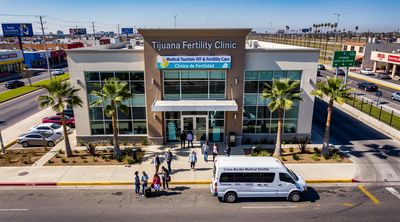
Tijuana wins for convenience if you live in the western United States. You can literally walk across the border for appointments. Many clinics offer shuttle services from San Diego. The city has invested heavily in medical tourism infrastructure.
Mexico City houses the country's most sophisticated fertility specialists and reproductive medicine programs. The capital city provides access to cutting-edge technology and highly trained doctors, often educated in the United States or Europe. However, IVF Tijuana Mexico cost often beats the capital for overall value.
Cancun appeals to patients who want to combine treatment with relaxation. The beach setting provides a calming environment during what can be a stressful process. Some packages include hotel stays at resort properties.
Guadalajara offers excellent value with a more authentic Mexican cultural experience. The city is less touristy than Cancun but still has international airports and modern medical facilities.
Why is IVF Treatment in Mexico So Affordable?
You might wonder how Mexico maintains such significantly lower prices while still providing high-quality care. The answer involves several factors working together.
Lower costs don't mean lower quality. Mexican fertility centers use the same equipment and protocols as top U.S. clinics. The savings come from economic factors, not compromised care.
Lower Operational and Medication Costs
Running a medical facility in Mexico costs substantially less than in the United States. Real estate, utilities, and staff salaries reflect Mexico's lower cost of living.
Clinic rent in major Mexican cities runs a fraction of comparable U.S. locations. A state-of-the-art facility in Tijuana might cost one-fifth of a similar space in San Diego. These overhead savings directly benefit patients.
Staff salaries, while competitive within Mexico, cost less than U.S. equivalents. A highly skilled embryologist or reproductive specialist earns a good living in Mexico while still costing the clinic less than their American counterpart. This isn't exploitation but rather reflects different economic realities.
Pharmaceutical pricing operates differently in Mexico. The government regulates medication costs more strictly, preventing the extreme markups common in the U.S. healthcare system. Pharmaceutical companies can't charge whatever they want.
The insurance system also plays a role. Mexican clinics operate primarily on direct payment, avoiding the massive administrative overhead that insurance billing creates. U.S. clinics employ entire departments just to handle insurance claims and denials. This bureaucracy adds costs that ultimately get passed to patients.
High Competition Among Fertility Center Providers
Mexico's medical tourism industry has exploded over the past decade. This growth created intense competition among providers.
Competition drives innovation and keeps prices reasonable. Clinics must offer excellent results at fair prices to attract patients. Those that don't simply lose business to competitors.
The market dynamics favor patients. When dozens of quality fertility centers compete for your business, you benefit from transparent pricing and inclusive packages. Clinics publish their prices online and offer straightforward packages to win your trust.
Quality competition matters too. Clinics don't just compete on price but also on technology, success rates, and patient experience. This pushes the entire industry toward excellence. Facilities invest in the latest equipment and continue training their staff to stay competitive. Much like how gastric sleeve surgery in Tijuana attracts thousands of patients annually, fertility treatment has become a major draw for medical tourism.
Patient reviews and word-of-mouth recommendations heavily influence clinic success. This accountability keeps providers honest and focused on results.

Planning Your Path to Parenthood: Finding the Right IVF Clinic in Mexico
Choosing where to receive fertility treatment is a deeply personal decision. The right clinic combines affordability with expertise and makes you feel supported throughout your journey.
Research thoroughly before committing to any facility. Your fertility journey deserves careful planning and informed choices.
Evaluating a Fertility Clinic: Success Rate and Accreditations
Success rates provide crucial insight into clinic performance. Look for facilities reporting live birth rates between 50-70% for patients under 35. These numbers match top U.S. clinics.
Be skeptical of claims exceeding 90% success. According to CDC data, even the best American clinics rarely exceed 40-55% live birth rates per cycle. Unrealistic claims suggest dishonesty or misleading statistics.
Prioritize clinics accredited by COFEPRIS, Mexico's federal health authority. This certification ensures the facility meets rigorous safety and quality standards. Association with the Latin American Registry provides additional credibility.
Technology indicates commitment to excellence. Modern embryoscopes allow continuous monitoring of embryo development without disturbing them. Advanced laboratories with proper temperature control and air filtration protect your embryos during their crucial first days.
English-speaking staff makes communication easier. Many Mexican fertility specialists trained in the United States and speak fluent English. This linguistic bridge eliminates misunderstandings about your treatment plan.
Understanding the IVF Procedure and Legal Landscape in Mexico
Mexico's regulatory environment supports reproductive freedom. The legal landscape permits procedures sometimes restricted in other countries.
Liberal regulations allow gender selection for family balancing through PGT. While this remains controversial in some places, Mexican law permits it. Clinics have their own policies, but the legal framework doesn't prohibit it.
Age restrictions are minimal legally, though individual clinics set their own policies. Most accept patients up to age 50, though some extend treatment to older patients after careful consultation.
Egg and sperm donation operates under anonymous, altruistic guidelines by law. Donors receive compensation for their time and effort, but the system prevents commercial exploitation. This ensures a healthy, screened donor pool while protecting everyone's privacy.
Similar to surrogacy in Mexico, the inclusive legal framework supports diverse paths to parenthood.
Frequently Asked Questions
How long do I need to stay in Mexico for an IVF cycle?
Plan for approximately 10-14 days for a standard IVF cycle. This includes initial consultation, monitoring appointments, egg retrieval, and embryo transfer. Some clinics offer remote monitoring options that reduce your time in Mexico. Frozen embryo transfers require just 3-5 days.
Are Mexican fertility clinics safe and accredited?
Reputable Mexican fertility centers meet international safety standards and hold COFEPRIS accreditation. Many clinics also maintain affiliations with international organizations and employ U.S.-trained specialists. Research thoroughly and verify credentials before choosing a clinic.
Can I combine IVF treatment with a vacation?
Absolutely. Many patients, especially those visiting Cancun or other resort areas, use their fertility journey as an opportunity to relax and destress. However, avoid strenuous activities around egg retrieval and embryo transfer. Light beach walks and gentle activities are fine.
What if my first cycle doesn't work?
Most clinics offer discounted rates for subsequent cycles. Having embryos frozen from your first cycle makes additional attempts less expensive since you skip egg retrieval. Discuss multi-cycle packages during your initial consultation to understand your options and potential costs.
Do I need to speak Spanish to get IVF in Mexico?
No. Most fertility centers catering to international patients employ English-speaking staff. Your specialist, coordinator, and nursing team will communicate clearly in English. Some clinics also offer translation services for other languages.