
Dental Bridge Cost in Mexico: 2025 Price Guide (Save 70%)
Table of Contents
- Comparing Dental Bridge Costs: Mexico vs. The US
- Mexico Dental Bridge Prices: A Detailed Breakdown by Type
- How Material Choice Affects Your Dental Bridge Cost in Mexico
- Price List: Comparing Dental Bridge Costs Across Mexican Dental Tourism Hubs
- Planning Your Dental Trip to Get Dental Bridges
- Dental Bridge vs. Dental Implant: Making the Right Choice
- Frequently Asked Questions
- Final Thoughts
Considering a dental bridge in Mexico? This guide reveals how you can save 50-80% on high-quality dental work without compromising on safety or materials.
We'll break down the exact prices for every type of dental bridge, compare costs in top dental tourism cities, and provide a complete checklist for planning your affordable dental trip south of the border.
Comparing Dental Bridge Costs: Mexico vs. The US
The cost difference between getting dental bridges in Mexico versus the United States is nothing short of remarkable. Thousands of Americans cross the border each year to take advantage of these savings, and the numbers tell a compelling story.
Let's look at the concrete figures:
Price Comparison for a 3-Unit Dental Bridge
| Procedure (3-Unit Bridge) | Average Mexico Price | Average US Price | Potential Savings |
|---|---|---|---|
| PFM (Porcelain-Fused-to-Metal) | $630 - $1,350 | $2,500 - $5,000 | 75% |
| All-Porcelain/Ceramic | $750 - $1,500 | $3,000 - $6,000 | 75% |
| Zirconia | $1,350 - $1,800 | $4,500 - $7,500 | 70% |
| Implant-Supported (2 Implants) | $3,150 | $7,000 - $15,000 | 77% |
These aren't just theoretical numbers. Real patients are achieving these savings every single day at accredited dental clinics in Mexico.
Overall Savings on Dental Work in Mexico
Here's what makes Mexico such an attractive option for dental treatment:
Average Savings Percentage: Patients typically save between 50% and 80% on dental bridges compared to prices in the U.S.
Full Mouth Restoration Savings: When you need extensive work, the savings become even more dramatic. Patients requiring comprehensive dental restoration can save anywhere from $10,000 to $30,000.
Key Insight: The math is simple but powerful. The more units your dental bridge requires, the greater your absolute dollar savings will be. A patient needing a six-unit bridge might save $5,000 or more on that single procedure alone.
Think about it this way: the money you save could cover your travel expenses, a comfortable hotel stay, and still leave thousands in your pocket. That's why dental tourism to Mexico has grown exponentially over the past decade.

Mexico Dental Bridge Prices: A Detailed Breakdown by Type
Understanding the different types of dental bridges helps you make an informed decision about which option best fits your budget and clinical needs. Each type of bridge serves a specific purpose and comes with its own cost structure.
Cost of an Implant-Supported Dental Bridge
An implant-supported bridge is a fixed dental restoration anchored to dental implants instead of natural teeth. This approach preserves jawbone health because the implants stimulate the bone just like natural tooth roots.
Here's what you can expect to pay:
Mexico Price (3-unit on 2 implants): $1,500 to $4,000.
The price varies based on the materials used, the complexity of your case, and the specific clinic you choose. However, even at the higher end, you're saving thousands compared to American prices.
Full Arch Implant Bridge Cost: For patients missing all teeth on an upper or lower arch, these options restore your smile completely:
- All-on-4 (Acrylic): $4,900 to $10,500 per arch
- All-on-6 (Acrylic): $6,300 to $12,000 per arch
U.S Price Comparison: A full arch implant bridge typically costs $24,000 or more in the United States. That represents over 70% savings when you choose Mexico for your dental care.
This type of bridge offers the most durable solution to bridge the gap. Because the implants integrate with your jawbone, they prevent bone loss and maintain your facial structure over time.
Traditional Fixed Dental Bridge Cost
A traditional fixed dental bridge is the most common type of dental restoration for missing teeth, It consists of one or more pontics (artificial teeth) held in place by dental crowns cemented onto the adjacent natural teeth on both sides of the gap.
Mexico Price (3-unit): $500 to $1,500.
This three-unit configuration is standard for replacing a single missing tooth. The two supporting teeth on either side of the gap receive crowns, and the replacement tooth sits between them.
Mexico Price (4-unit): Approximately $1,800.
Mexico Price (6-unit): Approximately $2,700.
As you can see, costs scale predictably based on the number of units required. Each additional tooth adds to the total cost, but the savings compared to the United States remain substantial regardless of bridge size.
Traditional bridges require preparation of the teeth on both sides of the missing tooth. Your dentist will reshape these natural teeth to accommodate the crowns that support the bridge. While this means altering healthy teeth, the procedure is well-established and highly successful.
Prices for Cantilever and Maryland Tooth Bridges
These specialized bridge options offer solutions for specific clinical situations and can be even more affordable.
Cantilever Bridge Cost: $450 to $1,200.
A cantilever bridge works differently than traditional bridges. Instead of anchoring to teeth on both sides, it attaches to just one adjacent tooth. Dentists typically use this approach in low-bite force areas like the front teeth, where there's only one natural tooth available for support.
Maryland Bridge (Resin-Bonded) Cost: $300 to $900.
A Maryland bridge takes a conservative approach that preserves the structure of your natural teeth. It uses metal or porcelain wings bonded to the back of adjacent teeth rather than covering them completely with crowns.
This makes Maryland bridges ideal for younger patients or situations where you want to avoid extensive tooth preparation. However, they're generally recommended only for front teeth because they don't withstand heavy chewing forces as well as traditional bridges.
U.S Price Comparison: The average cost of a Maryland bridge in the United States is around $2,500. Even this less expensive bridge type costs significantly more than in Mexico.
How Material Choice Affects Your Dental Bridge Cost in Mexico
The materials your dentist uses directly impact both the appearance and durability of your dental bridge. Understanding these options helps you balance aesthetics, strength, and cost.
Zirconia & E.max: Premium Strength and Cosmetic Appeal
Zirconia and E.max represent top-tier ceramic materials in modern cosmetic dentistry. These materials combine exceptional durability with biocompatibility and a natural, translucent appearance that mimics real teeth almost perfectly.
Mexico Price Per Unit: $450 to $1,700.
Total 3-Unit Zirconia Bridge Cost: Averages around $1,800 in Mexico versus $5,200 in the United States.
Zirconia bridges are incredibly strong. In fact, they're among the strongest dental materials available today. This makes them suitable for both front and back teeth, where they must withstand significant chewing forces while maintaining their appearance.
The translucency of zirconia allows light to pass through just like natural tooth enamel. This creates a lifelike appearance that's virtually indistinguishable from your surrounding teeth.
Best For: Patients who want the absolute best combination of strength and aesthetics. These materials work beautifully whether you need to restore your smile in visible front teeth or replace molars that endure heavy chewing pressure.
All-Porcelain/Ceramic: The Aesthetic Choice
All-porcelain or all-ceramic bridges are made entirely of ceramic materials, This gives them the most natural look of any bridge type, making them the top choice for visible front teeth.
Mexico Price Per Unit: $250 to $1,730.
Total 3-Unit Ceramic Bridge Cost: Averages around $1,200 in Mexico.
The wide price range reflects the variety of ceramic materials available. Premium ceramics like E.max sit at the higher end, while standard porcelain comes in at the lower range.
Ceramic bridges match the color, translucency, and texture of natural teeth better than any other material. If someone looks at your smile, they won't be able to tell which teeth are restorations and which are your original teeth.
The trade-off? All-porcelain bridges are slightly less durable than zirconia or bridges with metal frameworks. However, with proper care, they still last many years and meet international standards for quality and longevity.
Porcelain-Fused-to-Metal (PFM): The Cost-Effective Standard
Porcelain fused to metal bridges combine a strong metal base covered with a layer of tooth-colored porcelain. This design offers a practical balance of strength, aesthetics, and affordability.
Mexico Price Per Unit: $210 to $900.
Total 3-Unit PFM Bridge Cost: Averages around $1,200 in Mexico versus $3,500 in the United States.
The metal framework provides exceptional strength, making PFM bridges reliable for replacing multiple teeth or for patients who grind their teeth. The porcelain overlay gives them a natural appearance, though not quite as translucent as all-ceramic options.
One consideration: over time, if your gums recede slightly, a thin metal line might become visible at the gum line. Many patients don't mind this minor aesthetic trade-off given the significant cost savings and proven durability.
PFM bridges have been used successfully for decades. Your dentist can recommend whether this time-tested option makes sense for your specific situation.
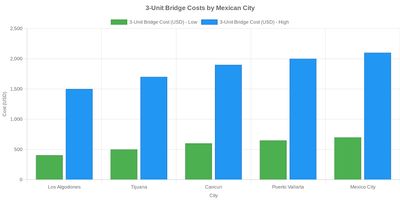
Price List: Comparing Dental Bridge Costs Across Mexican Dental Tourism Hubs
Location matters when planning your dental trip. Different Mexican cities offer varying price points, accessibility, and additional attractions.
| City | 3-Unit Bridge Cost (USD) | Savings vs. US Average | Why Choose This City? |
|---|---|---|---|
| Los Algodones | $405 - $1,500 | 70-80% | "Molar City." Highest concentration of dental clinics, leading to the most competitive prices. Easy border crossing. |
| Tijuana | $500 - $1,700 | 65-75% | Close to San Diego. Offers a wide range of modern, accredited clinics with slightly higher prices than Los Algodones. |
| Cancun | $600 - $1,900 | 50-65% | Combine top-tier dental care with a vacation. Prices are higher due to the resort location, but still offer huge savings. |
| Puerto Vallarta | $650 - $2,000 | 55-65% | Another popular vacation destination with high-quality dental clinics. Prices are 15-25% higher than border towns. |
| Mexico City | $700 - $2,100 | 55-65% | Major urban center with internationally accredited hospitals and dental facilities. |
Los Algodones earns its nickname "Molar City" honestly. This tiny border town has more dentists per capita than anywhere else on earth. The intense competition keeps prices at rock bottom while maintaining quality standards.
Getting dental work in Tijuana offers convenience for Southern California residents. You can literally walk across the border, get your treatment done at a modern clinic, and return home the same day. The city has invested heavily in medical infrastructure.
Cancun and Puerto Vallarta let you combine dental treatment with a beach vacation. The clinics in these resort areas cater to international patients and often provide concierge services. You'll pay slightly more, but many patients find the vacation aspect worthwhile.
Mexico City provides access to some of the most sophisticated dental facilities in Latin America. The capital city attracts top talent and maintains cutting-edge technology.
Planning Your Dental Trip to Get Dental Bridges
Proper planning ensures your dental trip goes smoothly and delivers the results you expect. Here's what you need to know about the process, costs, and choosing the right clinic.
The Dental Bridge Treatment Process: What to Expect
Getting a permanent bridge typically requires multiple appointments spread over one to two weeks. Understanding the timeline helps you plan your trip effectively.
Typical Timeline: The entire process usually requires 2-3 visits over a period of 1-2 weeks.
Visit 1: Your dentist will conduct a thorough examination and take X-rays to assess your oral health. If your abutment teeth are healthy, the dentist will prepare them by removing a portion of enamel to make room for the crowns. Impressions of your teeth are taken, and a temporary bridge is placed to protect the prepared teeth and maintain your ability to speak and chew normally.
Visit 2: During your second appointment, the dentist removes the temporary bridge and fits your custom-made permanent bridge. This involves checking the fit, bite alignment, and color match. Adjustments are made until everything is perfect, then the bridge is permanently cemented in place.
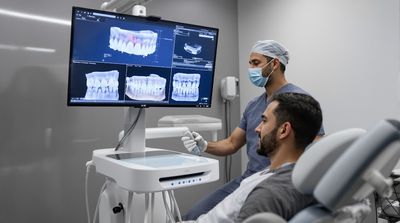
Technology: Many modern dental clinics in Mexico use advanced technology like 3D scans and CAD/CAM laboratory systems, to create precise restorations quickly. This technology can sometimes shorten treatment times and improve accuracy.
Between appointments, you'll need to care for your temporary bridge by avoiding sticky or hard foods and practicing gentle oral hygiene.
What's Included in the Prices for Dental Bridges?
Transparency in pricing matters. Reputable Mexican dental clinics typically provide all-inclusive quotes that cover the complete treatment process.
Standard Inclusions: Most price quotes from quality clinics include:
- Initial consultation and comprehensive diagnosis
- All necessary X-rays and imaging
- Local anesthesia during procedures
- The temporary bridge to wear while your permanent bridge is being made
- The final permanent bridge fabrication and installation
- Follow-up appointments to ensure proper fit and function
Warranty: Quality clinics typically offer a 2-5 year warranty on dental bridges, This warranty covers defects in materials or workmanship, giving you peace of mind about your investment.
Always request a detailed written quote before starting treatment. This eliminates surprises and helps you understand exactly what you're paying for.

Factoring in Potential Additional Dental Work Costs
Sometimes your dentist discovers issues that need addressing before placing a bridge. These additional procedures add to your total cost but ensure the long-term success of your restoration.
Tooth Extraction: $50 to $100 per tooth.
If a damaged tooth needs removal before placing your bridge, extraction costs remain very affordable in Mexico. This simple procedure is typically completed during your first visit.
Bone Graft: $250 to $600.
Patients choosing an implant-supported bridge sometimes need bone grafting if their jawbone has deteriorated from missing teeth. The graft strengthens the bone to support dental implants properly.
Sinus Lift: $600 to $1,200.
This procedure becomes necessary for upper jaw implants when the sinus cavity sits too low. The dentist lifts the sinus membrane and adds bone material to create adequate space for implant placement.
Even when you need these additional procedures, your total cost in Mexico typically remains far below, what you'd pay for the bridge alone in the United States.
How to Choose the Best Dental Clinic in Mexico
Selecting the right clinic is the most important decision you'll make. Quality varies, so you need to do your homework.
Check Accreditations: Look for affiliations with the American Dental Association or the Asociación Dental Mexicana (ADM). These organizations maintain strict standards that member clinics must meet.
Verify Dentist Credentials: Top dentists often hold board certifications or advanced training from internationally recognized institutions. Board-certified dentists might charge about 20% more than general practitioners, but this investment in expertise can prevent complications and ensure superior results.
Read Patient Reviews: Look for consistent positive feedback across multiple platforms. Pay attention to comments about communication, professionalism, and treatment outcomes. A few negative reviews among hundreds of positive ones is normal, but patterns of complaints should raise red flags.
Confirm Materials: Ensure the dental clinic uses FDA-approved materials and reputable brands for crowns and implants. Ask specifically which brands they use and verify these meet international standards.
Quality clinics welcome questions and provide detailed information about their dentists, facilities, and materials. If a clinic seems evasive or pressures you to decide quickly, look elsewhere.
Dental Bridge vs. Dental Implant: Making the Right Choice
Both dental bridges and dental implants effectively replace missing teeth, but they work differently and suit different situations. Understanding the trade-offs helps you choose wisely.
Pros and Cons of Getting a Dental Bridge
Bridges offer specific advantages that make them the right choice for many patients:
Key Advantages:
Lower Upfront Cost: Bridges cost significantly less than dental implants and require less treatment time. You can restore your smile quickly and affordably.
No Surgery Required: Unlike implants, bridges don't require surgical placement into the jawbone. The procedure is non-invasive unless you need tooth extractions first. This means faster healing and less discomfort.
High Success Rate: Properly maintained bridges have an 86-97% success rate over 5-10 years. This proven track record gives you confidence in the treatment.
Key Disadvantages:
Requires Altering Healthy Teeth: To place a traditional bridge, your dentist must remove enamel from the natural teeth on either side of the gap. These teeth need crowns to support the bridge, which means permanently changing healthy tooth structure.
Doesn't Prevent Bone Loss: The jawbone beneath a missing tooth needs stimulation from a tooth root to maintain its density. Since bridges don't replace the root, bone loss continues gradually over time.
Shorter Lifespan: Bridges typically last 10-15 years before needing replacement. Implants, by contrast, can last a lifetime with proper care.
Some patients prefer bridges because they fear surgery or have health conditions that make implant placement risky. Others choose bridges simply because the lower cost fits their budget better.
A dental implant is a titanium post surgically placed into your jawbone. It functions like a natural tooth root and can support a crown, bridge, or denture. While more expensive initially, implants prevent bone loss and never affect surrounding teeth.
Your dentist can help you weigh these factors based on your specific situation, oral health, and financial considerations.
Frequently Asked Questions
How long do dental bridges last in Mexico?
Dental bridges placed at quality Mexican clinics last 10-15 years on average, identical to bridges placed in the United States. The longevity depends more on the materials used, your oral hygiene habits, and regular dental checkups than on where the bridge was made. Zirconia bridges often last longer than traditional options.
Is it safe to get dental work done in Mexico?
Yes, when you choose an accredited dental clinic with verified credentials. Many Mexican dentists trained at top American dental schools and use the same materials and technology found in U.S. clinics. Research your clinic thoroughly, check reviews, and verify that they meet international standards before booking treatment.
Can I get a dental bridge done in one day?
Traditional bridges require at least two visits because the permanent bridge must be custom-fabricated in a dental laboratory. However, some clinics using advanced CAD/CAM technology can complete certain types of restorations in a single day. Most patients should plan for 1-2 weeks between initial preparation and final placement.
Do Mexican dental clinics accept American insurance?
Most Mexican dental clinics don't directly accept American insurance. However, many U.S. dental insurance plans provide reimbursement for procedures performed abroad. You pay the clinic directly, then submit your receipt and documentation to your insurance company for partial reimbursement. Check with your insurance provider about their international coverage policy.
What's the best material for a dental bridge?
The best material depends on which teeth you're replacing and your budget. Zirconia offers the best combination of strength and aesthetics for both front and back teeth. All-ceramic provides superior cosmetic results for visible front teeth. Porcelain fused to metal delivers excellent durability at a lower cost. Your dentist will recommend the most appropriate option based on your specific needs.
Final Thoughts
Mexico offers an unbeatable combination of affordable dental bridges and high-quality care from accredited dentists. With savings of 50-80%, you can afford extensive dental work that might otherwise remain out of reach.
Whether you need to replace one tooth or restore your smile completely, understanding the costs by type, material, and city helps you plan confidently. For cost-conscious patients, a short trip south of the border represents a worthwhile investment in long-term oral health.